
Fewer bracing materials.
Eliminate steel bars and wooden bracing on non-rail shipments with the specified barless liner arrangement.
Four ways to load.
No bars for non-rail shipments.
Load pneumatically, by gravity feed, with an auger, or by conveyor. Ag barless woven bulk container liners eliminate the need for expensive steel bars or wooden bracing when your shipment does not travel by rail. Match the liner to your product, container, and receiving operation.
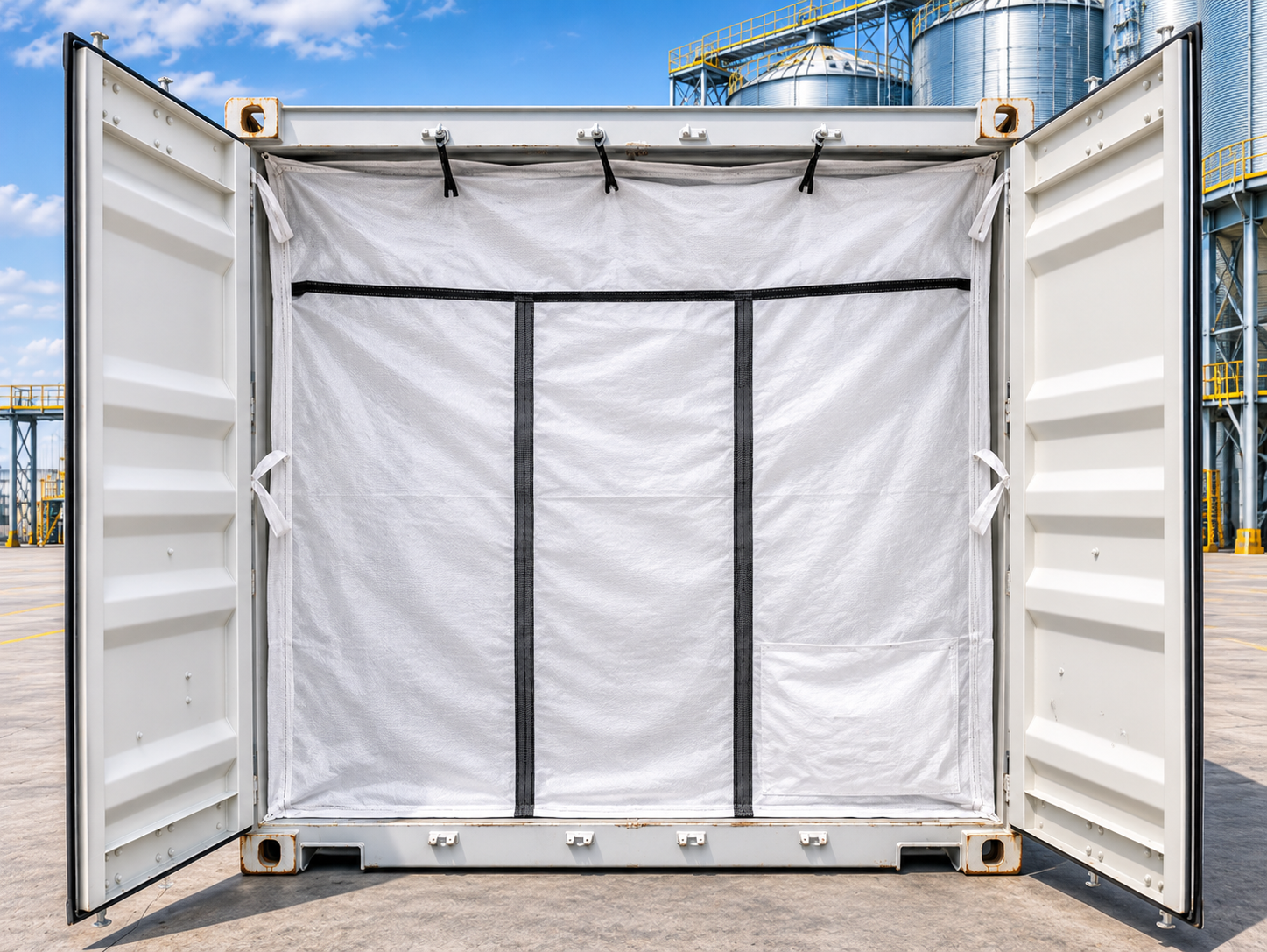
For shipments without rail transport, the Ag barless design removes the need for expensive steel bars or wooden bracing. Bring the product, intended load, container, and complete route into the liner review.
Eliminate steel bars and wooden bracing on non-rail shipments with the specified barless liner arrangement.
Choose pneumatic loading, gravity feed, an auger, or a conveyor. Review openings and connections against your equipment.
If any portion of the journey goes by rail, identify it before specifying the liner so the required support and bracing can be reviewed.
Plan the loading connection and product flow around the method your facility uses.
Load through a pneumatic conveying system. Share the connection dimensions, conveying conditions, and venting requirements.
Fill from a silo, hopper, or other gravity-fed source. Review the inlet location, opening size, and filling arrangement.
Use an auger to transfer product into the liner. Coordinate the auger outlet, liner opening, and filling process.
Load from a conveyor system. Review the transfer point, loading access, and product flow into the container.
Use your existing drawing as a starting point, or work through the requirements with the Bulk-Pack team.
Share the material, bulk density, flow characteristics, intended load, and product-contact requirements.
Provide the container type, actual inside dimensions, attachment points, and door opening so the liner fit can be reviewed.
Identify pneumatic, gravity, auger, or conveyor loading and provide equipment dimensions, connection details, and venting needs.
Confirm the specified strap and attachment arrangement, container preparation, and installation procedure for the intended load.
Identify every transport leg. The no-steel-bar or wooden-bracing benefit applies to non-rail shipments; rail movement needs a separate support and bracing review.
Define receiving equipment, unloading connections, order quantities, delivery location, and timing.
Confirm the complete route, container condition, liner fit, and specified barless attachment arrangement before loading.
Coordinate your loading method, venting, closures, and intended load with the liner design. Flag any rail movement during specification.
Confirm receiving connections and the unloading procedure with the destination facility before the shipment begins.
They can be loaded pneumatically, by gravity feed, with an auger, or by conveyor. Share your equipment details so the openings, connections, and venting requirements can be reviewed.
For shipments that do not travel by rail, the Ag barless design eliminates the need for expensive steel bars or wooden bracing. Use the specified liner attachment and installation arrangement for your application.
Identify any rail leg before ordering. The non-rail bracing benefit does not extend to rail movement; review the liner, support, and bracing requirements for the complete route with Bulk-Pack.
Confirm the discharge opening, connection dimensions, receiving equipment, and unloading method before settling on the liner specification.
Send the product, bulk density, intended load, container dimensions, loading method, complete transport route including any rail legs, discharge details, quantities, and delivery timing.
Tell us about your material, container size, loading method, and destination unloading process. Include the complete route and whether any leg travels by rail. Share an existing liner drawing to start the conversation.