Start at the source.
Share how your material is prepared and loaded, and the equipment your team uses.
Silo to Silo Solutions.
Most Economical. Less Handling Cost.
Move beyond the package and consider the whole shipment. Let’s review how a container liner can fit your product, loading operation, and customer’s receiving process.
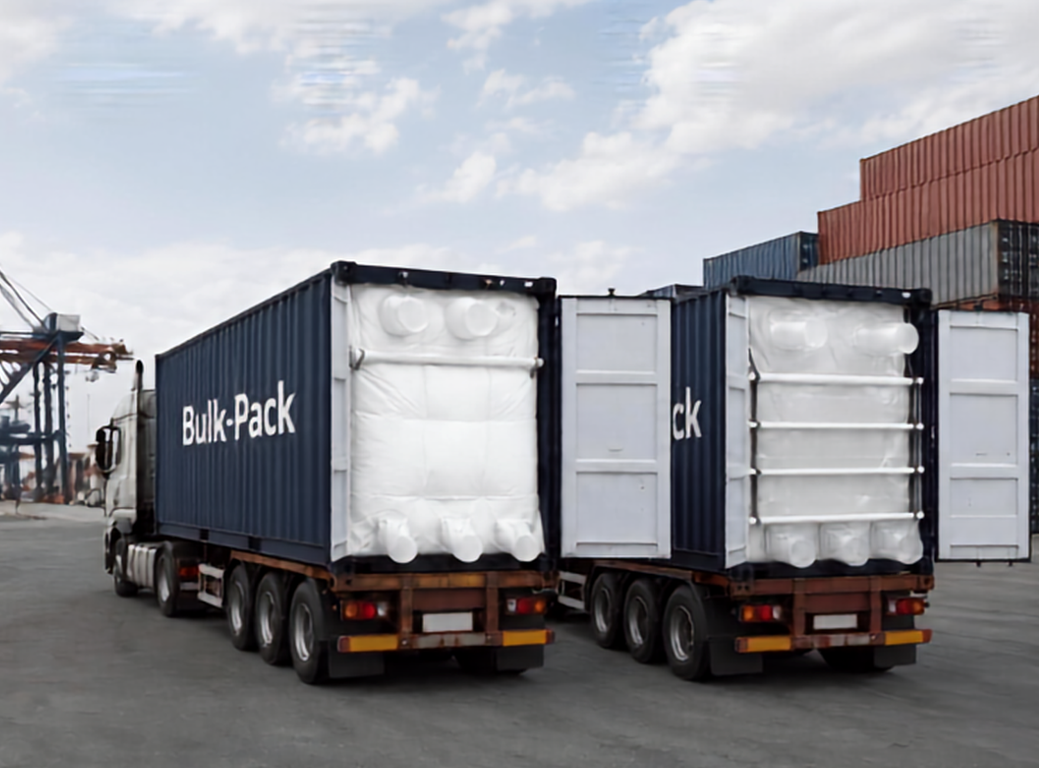
Bulk container liners provide an internal package for dry, free-flowing materials. Our silo-to-silo approach considers the loading point, container, and receiving facility together.
Share how your material is prepared and loaded, and the equipment your team uses.
Bring the container size, material requirements, shipment volume, and destination into the discussion.
Understand the receiving equipment and unloading process before settling on the liner specification.
Scroll or swipe to explore bulk container liner options. Select Learn More to review the details with our team.
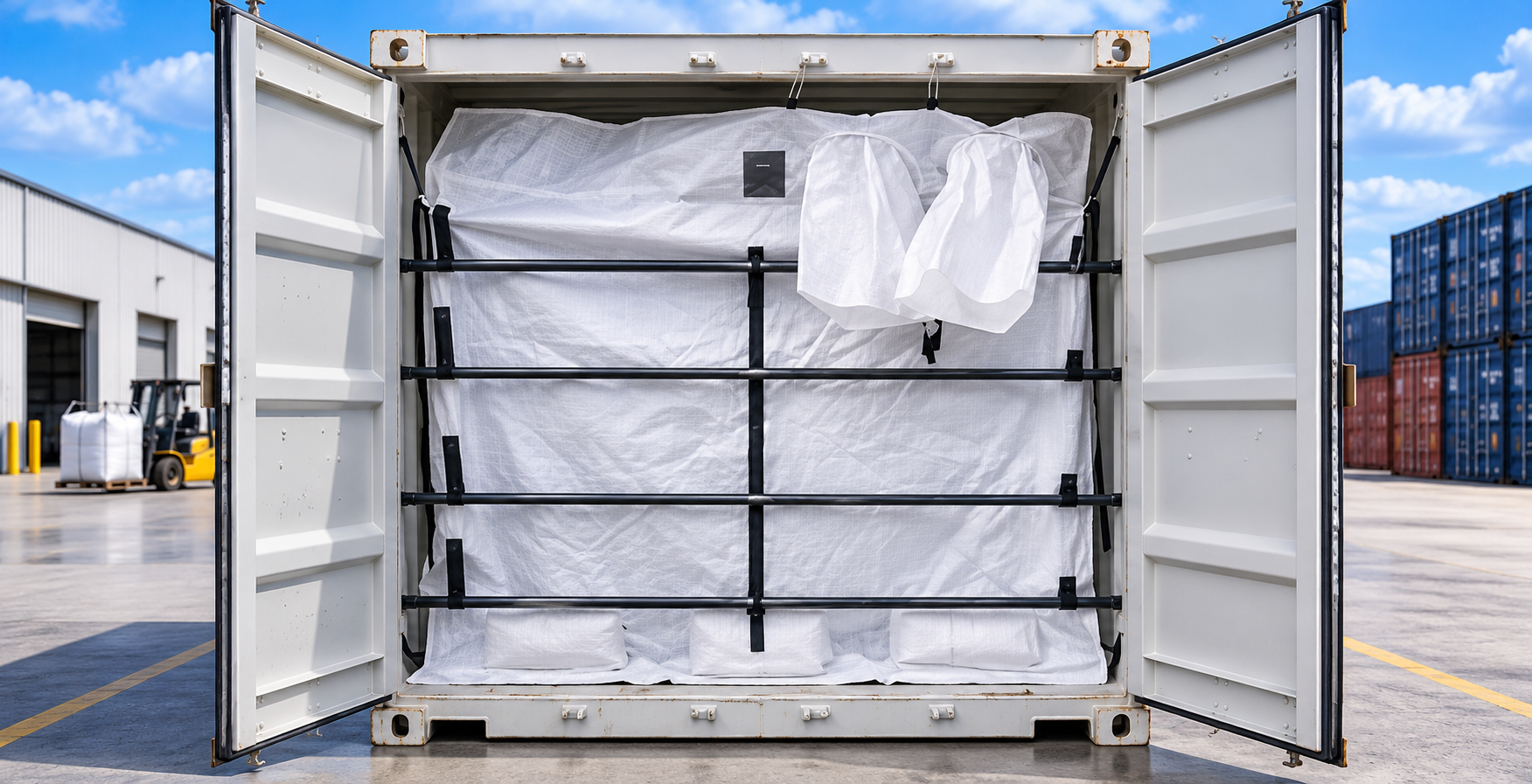
Review woven material, coating, bracing, loading openings, and discharge requirements.
Learn More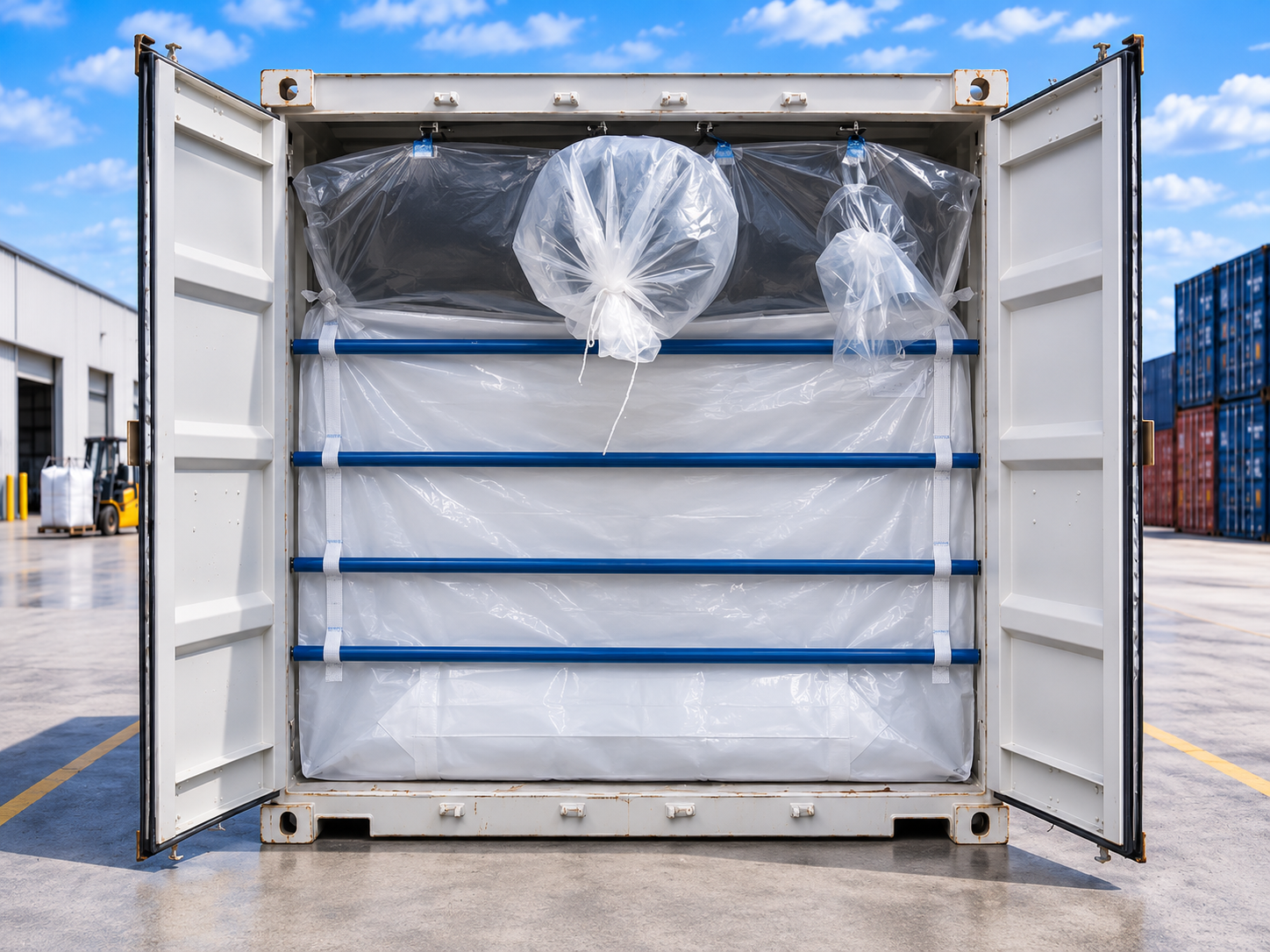
Moisture protection and contamination barriers for powders and sensitive dry bulk products.
Learn More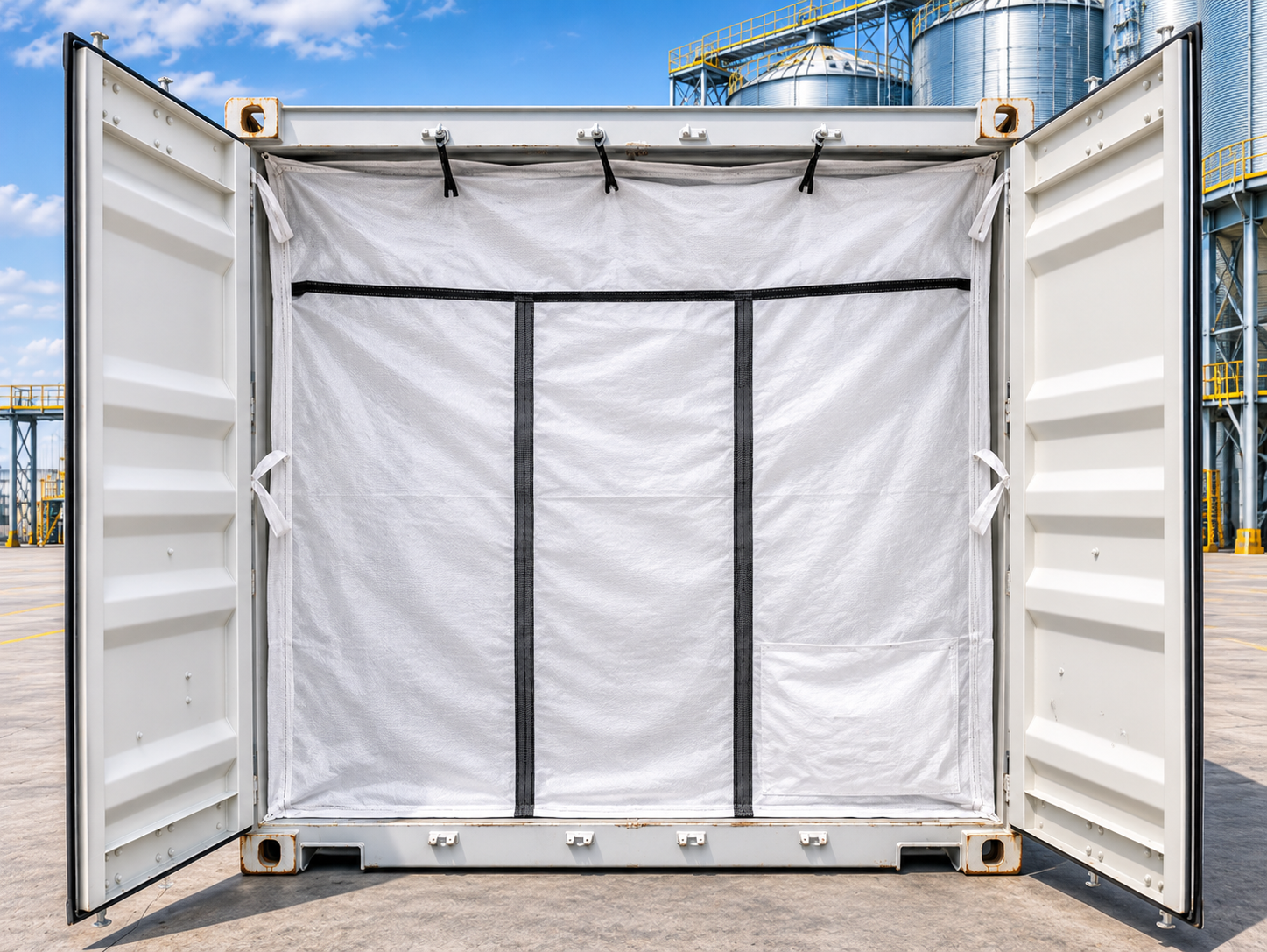
Pneumatic, gravity, auger, or conveyor loading. No steel bars or wooden bracing for non-rail shipments.
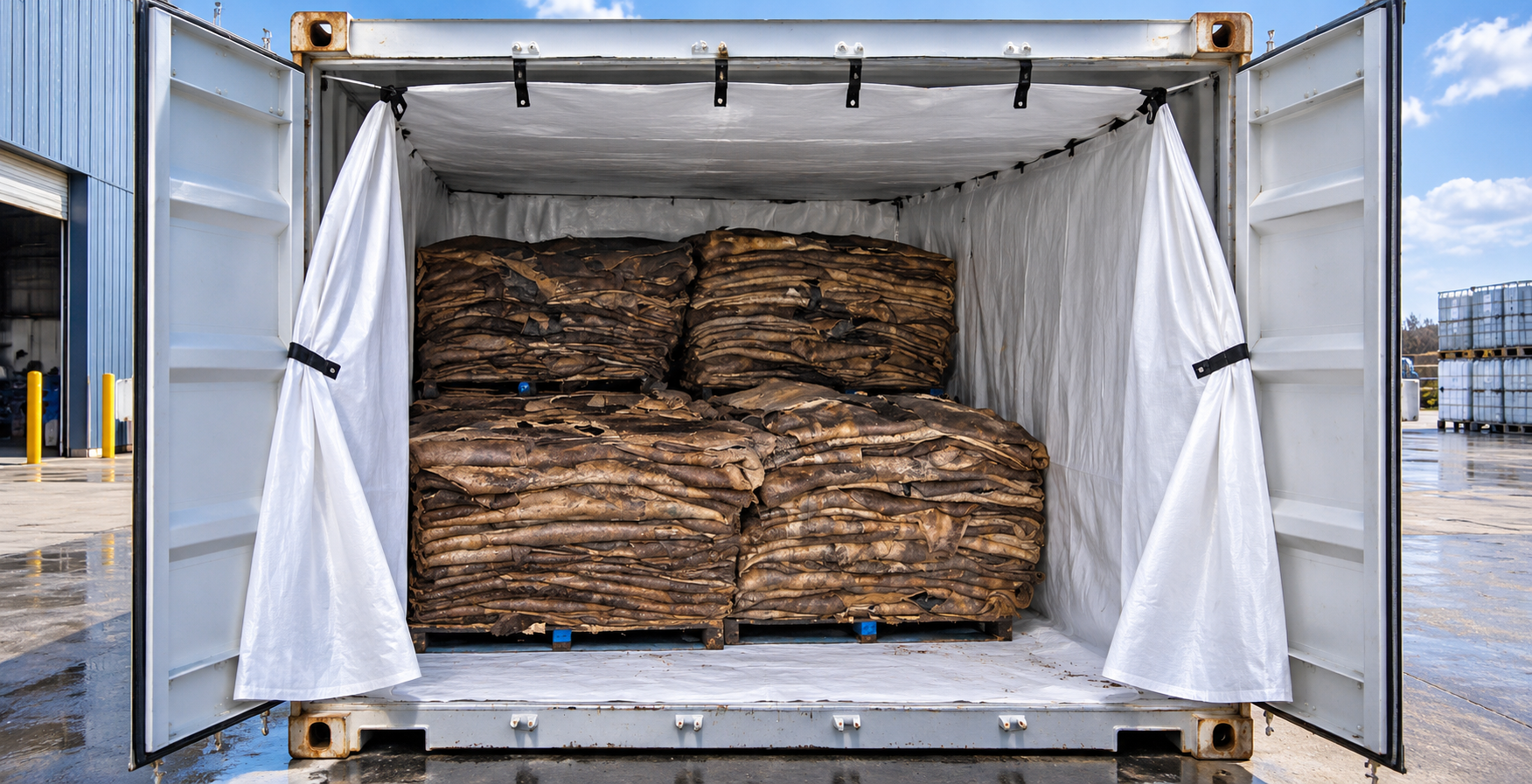
Learn MoreWide loading access for hides and skins, with interior coverage and brine-containment requirements reviewed for your shipment.
Learn More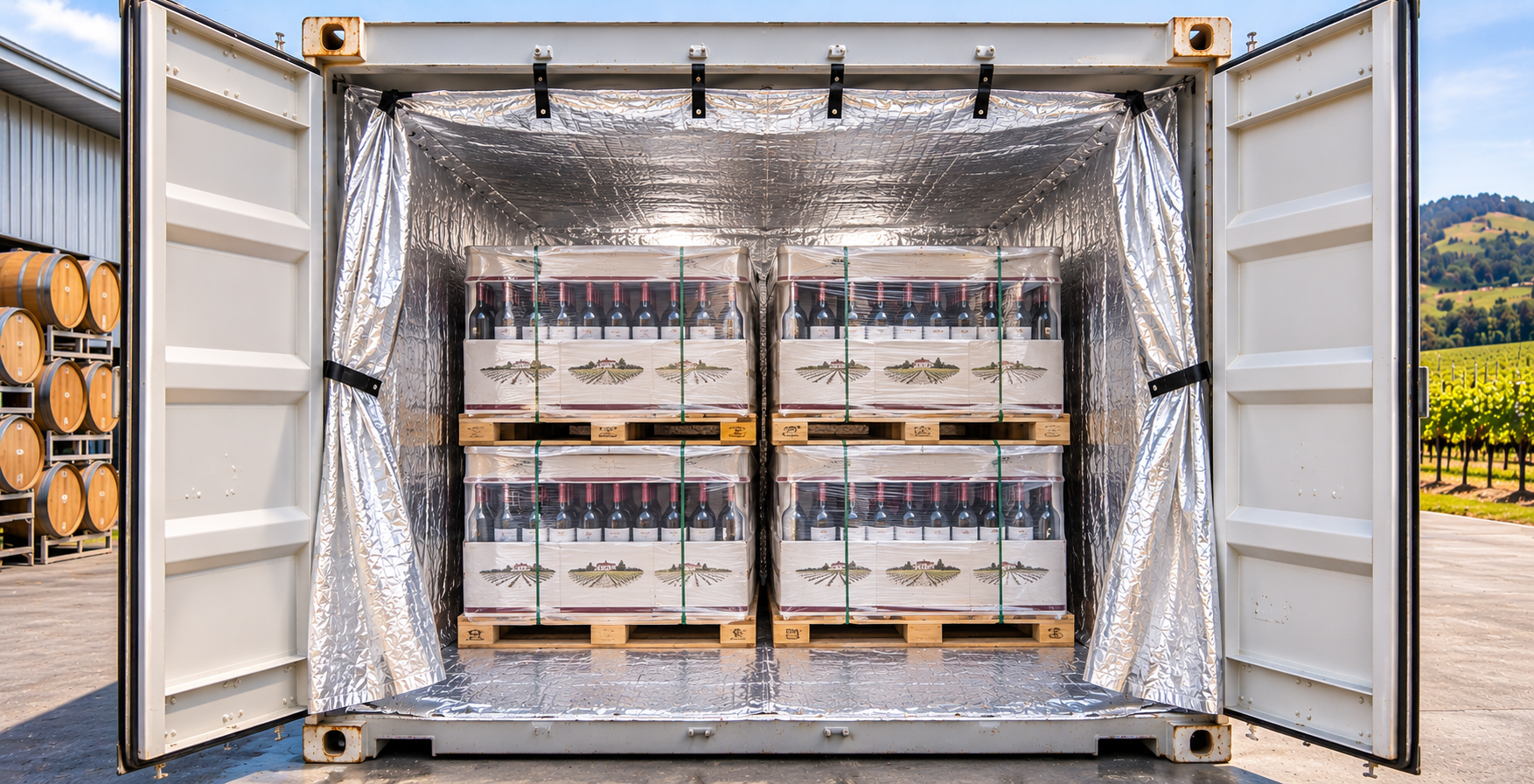
Help buffer high and low temperature swings during ocean transit, with wide loading access for palletized wine shipments.
Learn MoreShare your product, container size, target load, woven PP or PE specification, coating needs, bracing arrangement, and loading and discharge equipment. Include any food-contact or product-protection documentation requirements.
Discuss Woven PP/PE Bulk Container Liners ↗Tell us the product, container dimensions, film material and thickness, sealing requirements, loading method, and discharge process. Include barrier, contact, and handling requirements for review.
Discuss PE Film Bulk Container Liners ↗Share your product, intended shipment, container details, proposed support arrangement, loading method, and discharge equipment. Our team can review the barless construction and installation requirements with you.
Discuss Ag Barless Bulk Container Liners ↗Describe the hides, preparation and preservation method, moisture and containment requirements, loading arrangement, transport duration, and unloading process. Include the container details and any current liner specification.
Discuss Hide Bulk Container Liners ↗Share your cargo, pallet or load dimensions, access needs, liner installation method, route, transit duration, and temperature exposure. Define your protection goals and the performance documentation needed for the proposed design.
Discuss Thermal Wide Access Container Liners ↗Material, flow characteristics, bulk density, product-contact requirements, and any moisture or contamination concerns.
How is the container filled? What equipment is available at the destination? Share both processes with our team.
Container dimensions, construction, openings, discharge arrangement, and support requirements belong in one coordinated review.
Tell us your shipment frequency, order quantities, delivery location, and target start date so we can discuss a practical supply plan.
One shipment. Two operations. Let’s make sure the specification reflects what happens at both ends.
Packaging, handling, and supply decisions affect each other. Our team can help review your existing process and discuss where a liner solution may fit.
Talk through your application ↗Share the material, flow characteristics, product-contact requirements, and receiving setup. We can review the application with you before discussing a liner configuration.
Our existing range includes liners for 20-foot, 30-foot, 40-foot, 40-foot high-cube, and 53-foot containers. Confirm your actual container dimensions and design requirements with our team.
Yes. Bring details about the equipment at both ends of the shipment. The liner specification should account for loading, containment, transport, and discharge together.
Compare the complete shipment: packaging, filling, handling, storage, transport, and receiving. Share your current method and volumes so we can discuss the opportunity.
Yes. Share your liner drawing, specification, product details, and delivery requirements. In this preview, selected files must be attached manually in your email app.
Tell us about your material, container size, loading equipment, and destination unloading process. Share an existing liner specification or drawing to start the conversation.