
Review certification
Where GFSI-recognised certification is required, request the manufacturing site’s current certificate and confirm the programme, scope, and validity.
Protect your product.
Build confidence in your supply.
Food contact bulk bags start with your product, process, and customer requirements. Bring bag construction, manufacturing food safety requirements, and product documentation into one specification review.
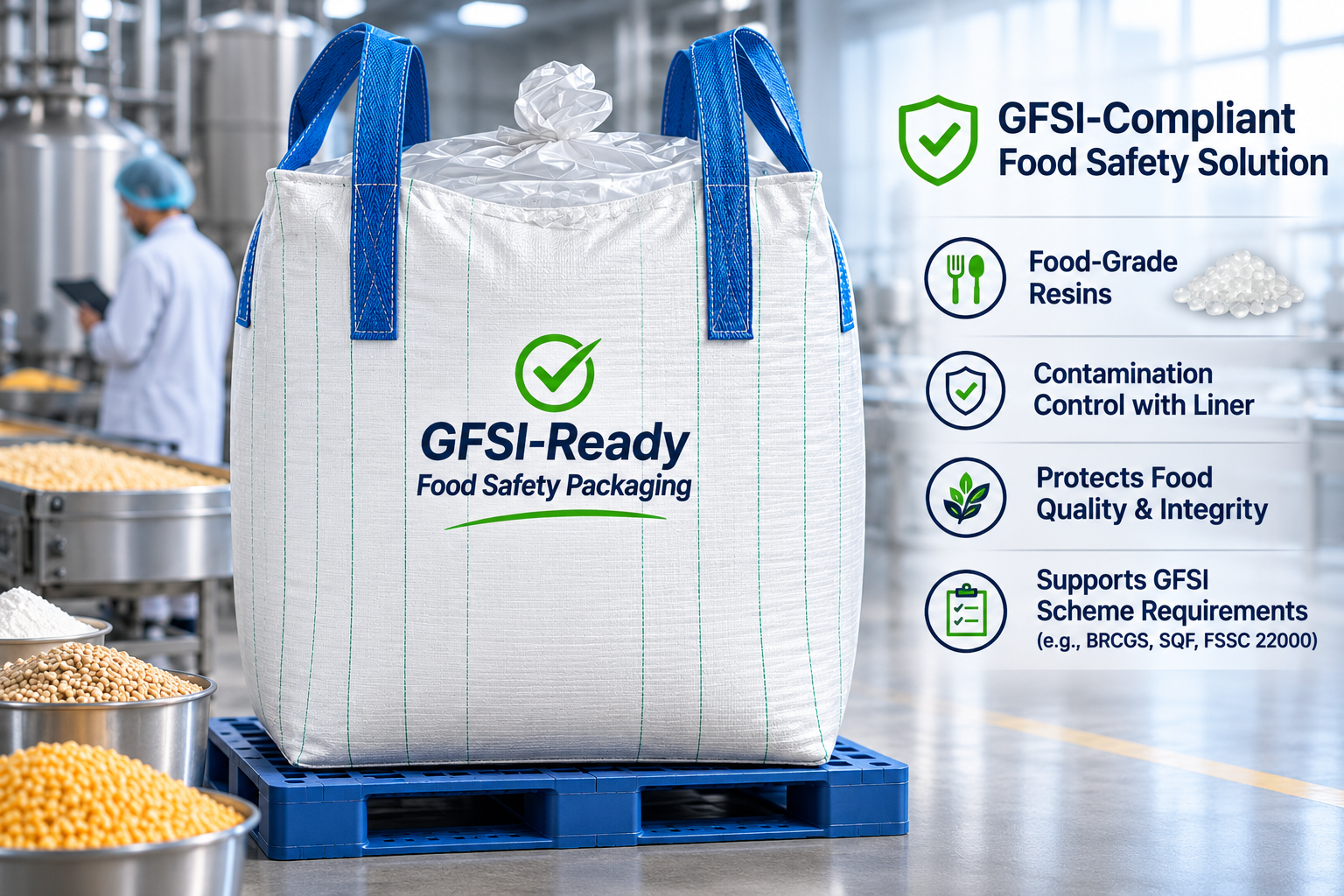
Align the manufacturing site, packaging materials, and your customer’s approval process before finalising a bag specification.
Where GFSI-recognised certification is required, request the manufacturing site’s current certificate and confirm the programme, scope, and validity.
Identify the food, contact surfaces, liner, temperature, storage time, and destination market so the relevant material documentation can be reviewed.
Include filling, storage, lifting, discharge, hygiene, and customer approval requirements in the finished bag specification.
GFSI recognises certification programmes; certification bodies issue site certificates. Read the GFSI certification FAQ ↗
Use your current specification as a starting point, or work through the requirements with our team.
Tell us what goes in the bag, whether contact is direct or through a liner, storage duration, temperature, and destination market.
Define bag dimensions, safe working load, lifting loops, filling and discharge openings, seams, and handling equipment.
Review liner material, thickness, fit, closure, moisture protection, and any barrier requirements with the complete bag design.
Share your requirements for manufacturing hygiene, loose-thread control, cleaning, protective packing, and incoming inspection.
Identify lot coding, documentation, retention, and notification requirements for changes to materials or construction.
Send your supplier approval checklist, required certification programme, order quantities, delivery schedule, and current specification.
Our 45+ years of FIBC manufacturing and sales experience help connect your product requirements with the details of bag construction and handling.
Talk with us about food contact materials, liners, customer approval requirements, and supply planning. Request the documentation relevant to the proposed manufacturing site and bag design.
Use these resources to support your packaging and supplier approval discussions.
Check recognised certification programmes and their applicable scopes.
Explore GFSI programmes ↗Review the association’s food safety guide as a starting point for your application.
FIBCA Food Safety Guide ↗Find bulk bag handling, design, and specification resources in our library.
Visit the Resource Library ↗The Global Food Safety Initiative recognises food safety certification programmes. Certification bodies audit and certify manufacturing sites against those programmes. Review the applicable site certificate, programme version, scope, and validity as part of supplier approval.
A site food safety certificate and food-contact material documentation serve different purposes. Request documentation for the proposed bag, liner, intended food, contact conditions, and destination market.
Yes, liner requirements can be included in the specification review. Share filling temperature, storage conditions, moisture or barrier needs, closure method, and discharge process.
Specify both needs when requesting a review. Type B, Type C, or Type D selection depends on the product and operating environment, and the liner must be considered with the bag.
Start with your customer’s approval requirements. These may include the manufacturing site certificate and scope, product specification, relevant food-contact declarations, traceability information, and handling instructions.
Send your drawing, current bag specification, product information, certification requirements, and annual usage. Bulk-Pack can review the configuration and documentation needs with you.
Share your food product, contact conditions, bag dimensions, fill weight, liner needs, customer certification requirements, and quantity.