
Pallet top sheets
Define the sheet dimensions, overlap, application sequence, and how the sheet will be held in place with the rest of the packaging.
Cover the load.
Plan for the journey.
Review pallet covers, top sheets, and thermal pallet covers around your loaded dimensions, application method, and storage conditions. Bulk-Pack can help define the fit, film, and coverage your operation needs.
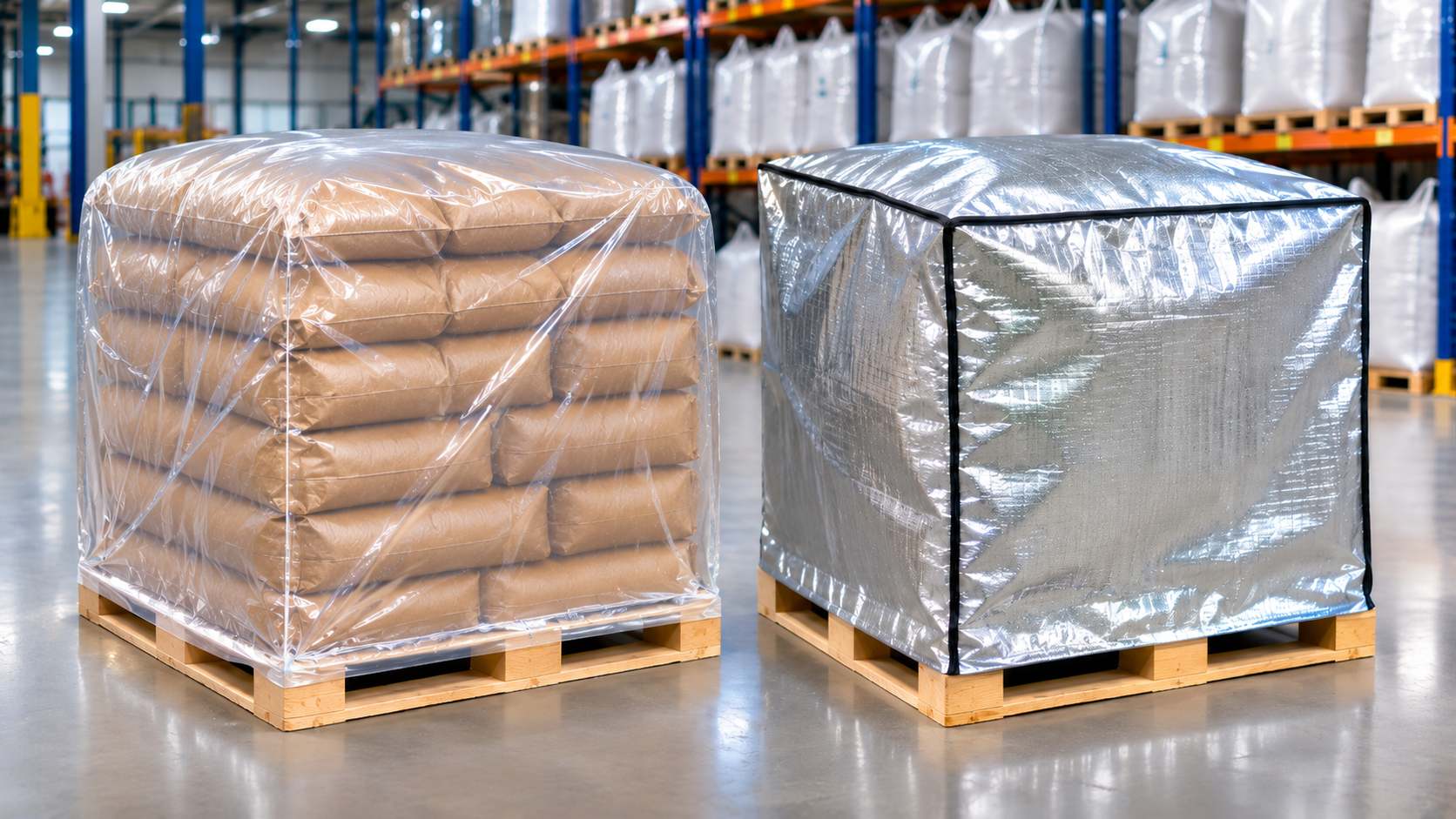
Bring the surfaces to be covered, load dimensions, and method of application into the same specification discussion.
Define the sheet dimensions, overlap, application sequence, and how the sheet will be held in place with the rest of the packaging.
Review cover length, width, depth, gussets, and clearance for the actual loaded pallet, including any overhang.
Discuss clarity, colour, printing, exposure, and any shrink-process requirement with your equipment and product conditions.
Review passive thermal coverage for loading docks, staging areas, outdoor transfers, and transport where your product may face changing temperatures.
Reflective materials can help reduce radiant heat gain from sunlight. Review the actual construction and exposure conditions rather than judging performance by a silver appearance.
Insulation can slow heat transfer between the load and its surroundings. Material, thickness, seams, openings, and the complete cover arrangement affect performance.
Specify loaded dimensions, overlap, closure access, and any base sheet or bottom coverage. Review gaps, forklift access, installation, and the handling sequence.
Provide product temperature limits, starting load temperature, route, transit time, staging delays, and expected hot or cold exposure. Include temperature-monitoring requirements.
Discuss humidity, temperature changes, and the product’s moisture sensitivity. Breathability and condensation behaviour depend on the material and package design; they are not universal cover properties.
Discuss food ingredients, beverages, chemicals, and other temperature-sensitive goods around their specific requirements. Include cleaning, reuse, and inspection expectations where applicable.
Request construction-specific thermal data and evaluate a representative loaded pallet against your shipping profile. Define acceptance criteria with your product and logistics team.
Passive protection, application-specific performance. A thermal cover does not actively refrigerate or heat a load. It cannot guarantee a temperature range or protection time without an evaluated package and shipping profile. Review it as part of your temperature-management system, including any required refrigerated transport. Bulk-Pack can help size the cover and review the appropriate construction and supporting documentation.
Discuss Thermal Pallet Covers ↗Use the loaded dimensions and process requirements to start the review rather than pallet size alone.
Provide the maximum loaded length, width, and height, including overhang, irregular cartons, and any required allowance around the load.
Define top-only or top-and-side coverage, cover depth, gussets, bottom opening, overlap, and how the cover will be retained.
Specify the material, thickness and units, clarity or colour, and the performance requirements for the proposed film.
Describe manual placement or automated equipment, the pack format you need, and how the cover fits into the wrapping process.
Share indoor or outdoor exposure, expected duration, handling conditions, and protection needs related to dust, moisture, or sunlight.
Include printing, labels, traceability, customer documentation, order quantities, delivery location, and timing.
Tell us how your operation builds, wraps, moves, and stores palletized products. We can help review the cover alongside the pallet, stretch wrap, and other packaging requirements.
Start with what you use today and what needs to improve. Include application time, equipment clearance, coverage, storage conditions, and any damage or fit issues.
Cover dimensions and protection are application-specific. Bulk-Pack can help size the cover and review the proposed material. Confirm any weather, UV, or barrier performance for the actual construction.
Review the related products with the way your operation handles the load.
Discuss wrapping equipment, film, and the requirements of your palletized load.
Explore Stretch Wrap ↗Review pallet dimensions and handling requirements alongside your cover specification.
Explore Pallets ↗Explore liners for FIBCs, boxes, and drums, plus shaped and specialty liner categories.
Explore Film Liner Types ↗Send the pallet dimensions and the maximum dimensions of the loaded pallet. Include overhang, load height, irregular shapes, the required coverage, and a photo or drawing if available.
A top sheet covers the upper surface of the load. A hood-style cover extends over the top and sides. Define which surfaces need coverage and how the material will be retained during handling.
There is no universal duration. Review the actual cover, load temperature and thermal mass, ambient exposure, route, and handling times. Request relevant test data and validate the proposed system against your product limits.
Share your wrapping sequence and equipment so the cover or top sheet can be reviewed with the complete packaging arrangement. Tell us whether it is applied before, during, or after wrapping.
Tell us the exposure conditions and duration. Outdoor suitability, weather protection, and any UV requirement need confirmation for the specific film, seams, openings, and application method.
Specify load restraint separately. Review the pallet, stacking pattern, stretch wrap, strapping, and other securing measures with the transport and handling requirements.
Share the proposed film requirement, shrink equipment, heating process, and product sensitivity. A shrink application needs a film and process selected for that purpose.
Yes. Send the current specification, dimensions, thickness, packaging format, usage, and any fit or handling issues you want to address.
Share your pallet and loaded dimensions, cover style, film thickness, application method, storage and shipping conditions, and quantity. Include your current specification or a photo of the load.