
Slow heat gain.
Review protection against short hot exposures around sun-heated containers, terminal waits, and warmer sections of the route.
A smoother temperature journey.
From cellar to destination.
Help protect wine shipments from rapid high and low temperature swings during ocean transit. A thermal container liner adds passive insulation around your cargo, while wide access accommodates palletized loading and unloading.
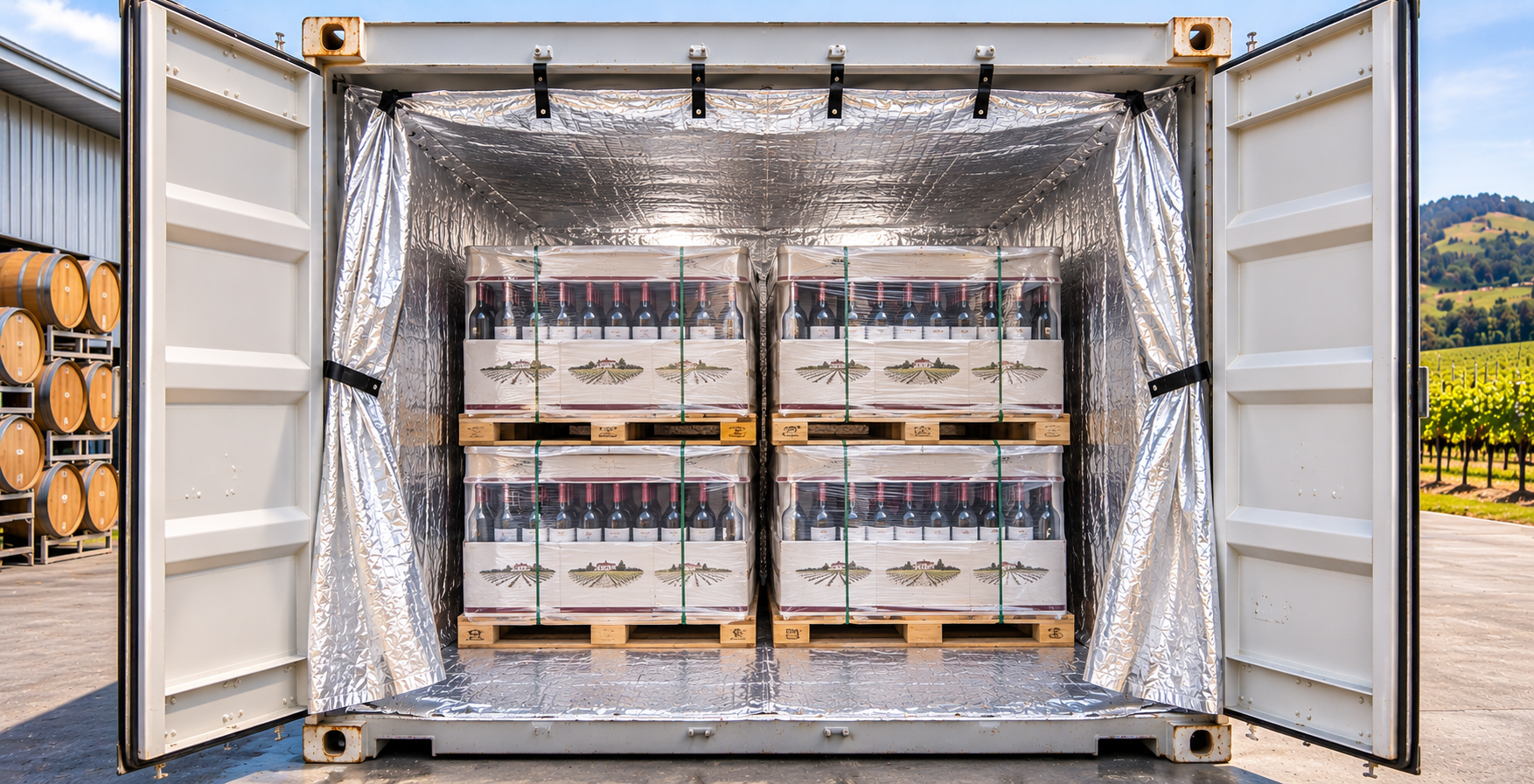
Wine can encounter changing conditions during port waits, sea crossings, and inland delivery. Passive insulation helps slow heat transfer, reducing the impact of short temperature excursions on the cargo.
Review protection against short hot exposures around sun-heated containers, terminal waits, and warmer sections of the route.
Assess cold-weather legs and brief low-temperature excursions against the wine’s starting temperature and the planned exposure duration.
Coordinate pallet loading, interior coverage, and door-end closure to create a practical thermal protection arrangement.
Match protection to the route. Passive insulation buffers temperature change; it does not maintain a fixed temperature or guarantee freeze protection during prolonged exposure. Review active temperature control when your shipment requires a defined range throughout transit.
Bring product limits, loading details, and route conditions into one review.
Identify bottled wine, case dimensions, pallet layout, starting product temperature, and the temperature limits established by your wine team.
Share origin, destination, sailing schedule, transshipment ports, inland legs, expected weather, and time spent at terminals.
Review the thermal construction, container inside dimensions, interior coverage, attachment points, and continuity around seams and closures.
Coordinate pallet dimensions, forklift clearances, loading sequence, and door-end closure. Protect the liner from handling damage.
Define expected high and low temperatures and exposure duration. Assess whether passive buffering is sufficient for the intended journey.
Plan data logger locations, acceptance limits, and shipment review. Use measured route data to assess the proposed arrangement.
Review wine temperature at loading, container condition, liner installation, and waiting time before sailing.
Account for terminal dwell, transshipment, seasonal conditions, and the duration of hot or cold exposure.
Coordinate prompt receiving and review logger records against your shipment acceptance criteria.
A passive thermal liner slows heat transfer between the container environment and the cargo, helping moderate rapid temperature changes. Its effectiveness depends on construction, installation, initial cargo temperature, and the exposure profile.
Insulation slows heat transfer in both directions, so it can help buffer short hot and cold excursions. Prolonged exposure can still move the wine toward the surrounding temperature; assess the complete route and duration.
A passive liner does not actively cool or heat the cargo or maintain a set point. If the wine requires a controlled range throughout transit, review refrigerated or other active temperature-control options with your logistics team.
The opening accommodates loading and unloading of palletized wine cases. Review the access dimensions and closure so loading efficiency and thermal coverage work together.
Yes. Use data loggers and an agreed review process to understand actual exposure. A liner specification alone does not establish the wine temperature throughout the shipment.
This page focuses on packaged and palletized wine. Bulk liquid wine requires a separate review of the liquid containment system, compatibility, and thermal protection arrangement.
Share your wine packaging, pallet layout, container dimensions, route, season, transit duration, acceptable temperature range, and any temperature records from previous shipments.