
Plan around the load.
Review pallet sizes, loading equipment, clearances, and door-end access before specifying the opening and closure.
Open up loading access.
Plan for containment.
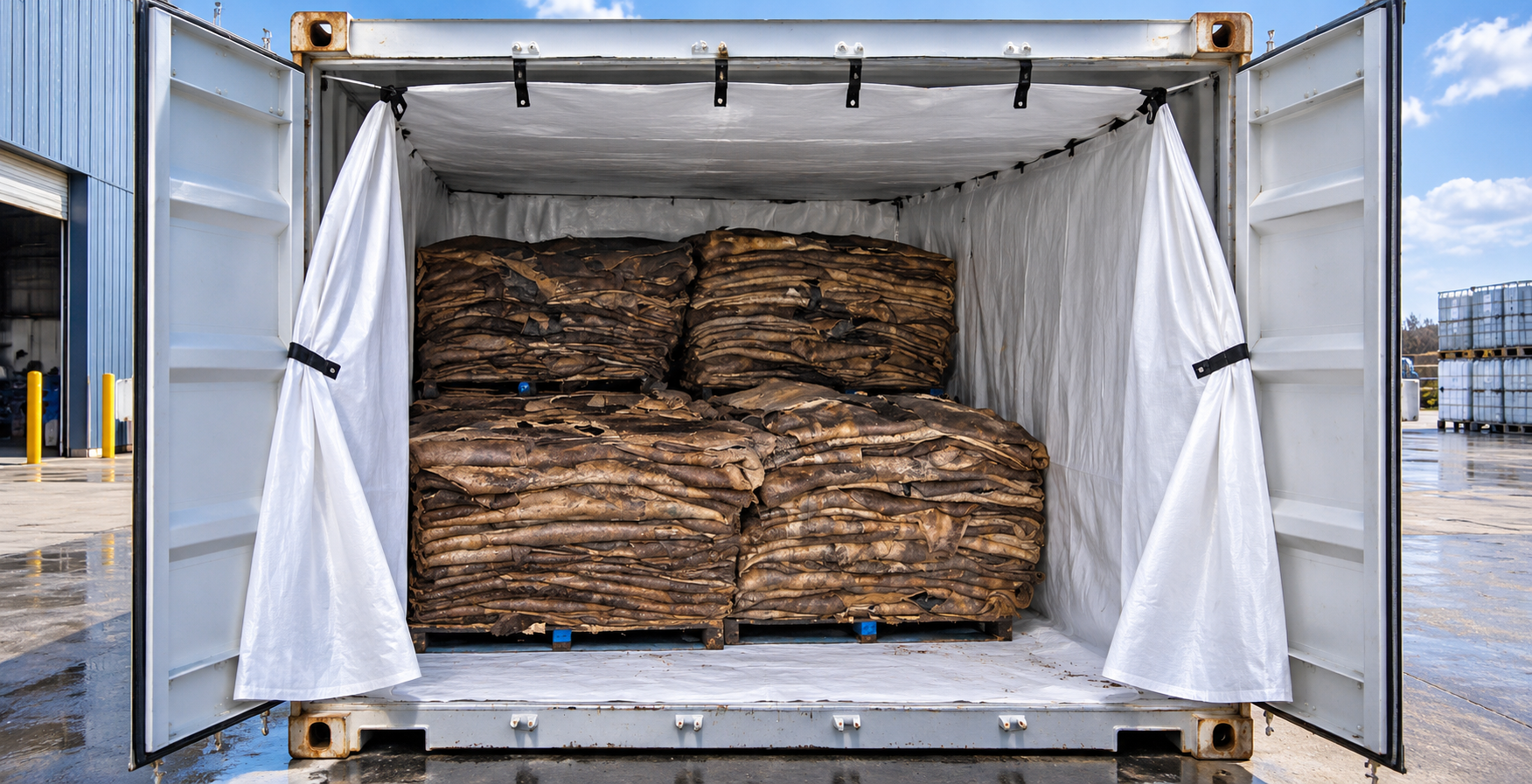
Give your team wide loading access while separating hides and skins from the container interior. Review the liner material, seams, floor protection, and door-end closure around your cargo, handling equipment, and shipment requirements.
The wide opening provides access for positioning hides, skins, and palletized loads. Coordinate interior coverage, attachment, and the final closure with the way your team loads and unloads.
Review pallet sizes, loading equipment, clearances, and door-end access before specifying the opening and closure.
Match floor and wall coverage to the cargo and carrier requirements, with attention to corners, attachment points, and door-end details.
Wet salted hides can release brine during transport. Review the material, seams, and closure as a complete containment system for that exposure.
Use your existing drawing as a starting point, or work through the requirements with the Bulk-Pack team.
Identify wet salted, wet blue, or dry salted hides or skins. Describe preservation, moisture, expected liquid release, and the intended transit conditions.
Provide actual inside dimensions, attachment locations, pallet sizes, and required floor and wall coverage. Confirm the door-end arrangement.
Review liner thickness, construction, liquid-contact compatibility, seam integrity, and closure details against the shipment and carrier instructions.
Share the loading method, forklift access, pallet condition, load layout, and unloading process. Coordinate access without compromising the liner.
Plan protective layers and handling practices to reduce damage from container surfaces, pallet edges, and equipment. Specify absorbent materials where required.
Send the carrier’s current packing instructions with the route, transit time, load details, quantities, and delivery timing.
Inspect the container for debris, protrusions, and rough surfaces. Plan the protective layers required beneath and above the liner.
Protect the liner from pallet edges and forklift movement. Keep the access area controlled during loading, then complete the specified closure.
Coordinate unloading, liner removal, and container cleaning with the receiving facility and carrier.
Carrier guidance addresses container preparation, protective layers, liner installation, and loading practices. Obtain the instructions for your booking before finalizing the specification.
They can release salty brine during transit. The liner construction and finished closure need to be reviewed for that exposure, alongside container preparation and protection during loading.
No. Protect the liner from equipment and pallet damage using the protective arrangement specified for the shipment and carrier.
Their condition and liquid-release characteristics differ. Identify the actual cargo and obtain the carrier’s packing instructions before selecting the liner and protective materials.
Confirm thickness and material construction with the carrier and Bulk-Pack for the actual shipment. A published carrier minimum is not a universal specification or a rating for every liner.
No. Review cargo securing and weight distribution separately from liner coverage and liquid containment.
Send hide type and condition, container dimensions, loading method, pallet details, expected liquid exposure, route, carrier instructions, quantities, and delivery timing.
Tell us whether your hides are wet salted, wet blue, or dry salted. Include container dimensions, pallet and loading details, expected liquid release, transit conditions, carrier instructions, quantities, and delivery timing.