
Start with what you ship.
Define the material, bulk density, flow characteristics, intended load, and protection requirements.
Built around your product.
Configured for the journey.
Bring your product, container, and handling process together with a woven polypropylene or polyethylene bulk container liner. Review the construction, loading sleeves, discharge openings, and support arrangement from source to destination.
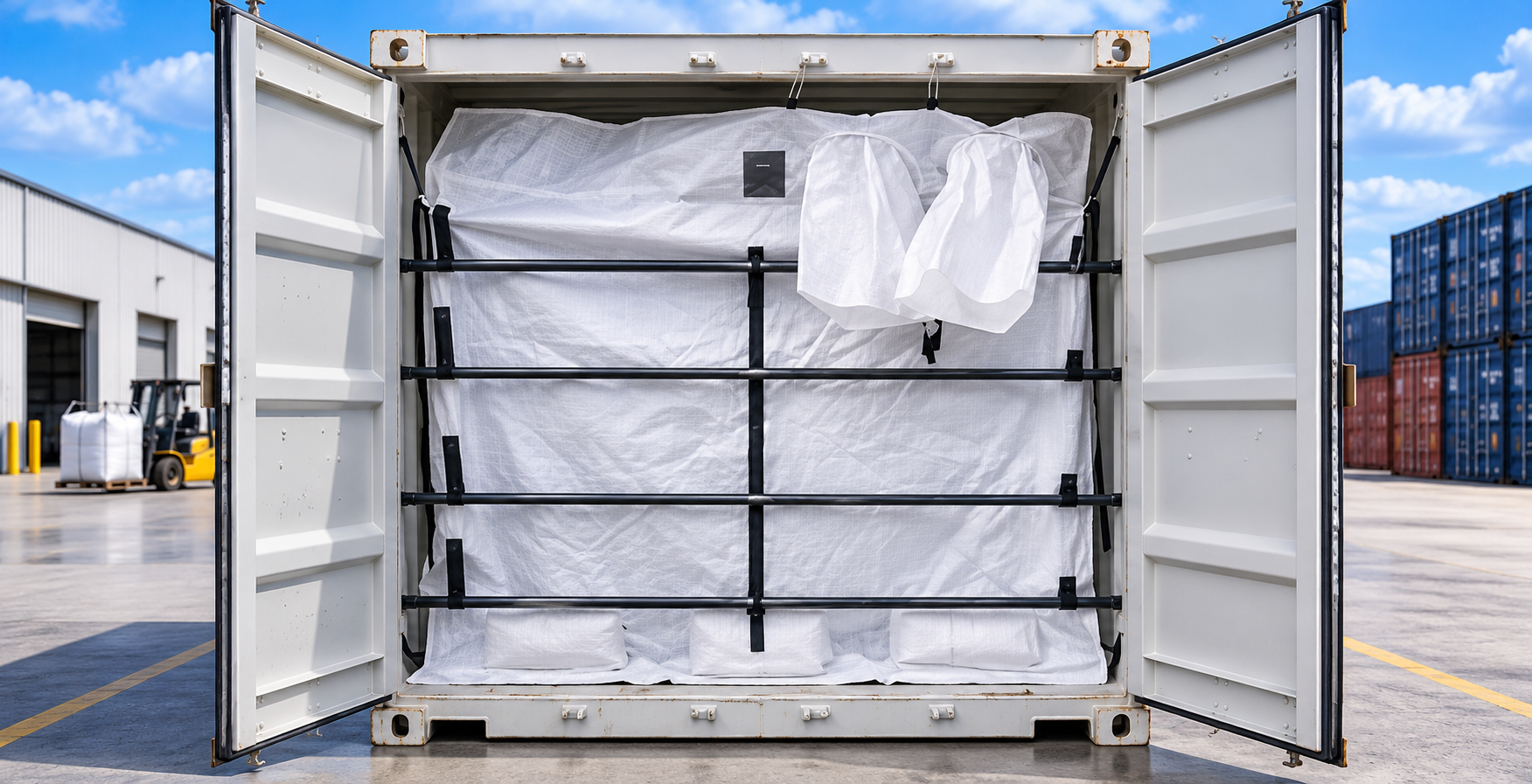
Woven bulk container liners form an internal package for suitable dry bulk products. The right specification accounts for the material, container, and equipment at both ends of the shipment.
Define the material, bulk density, flow characteristics, intended load, and protection requirements.
Review woven PP or PE, coating, seams, openings, attachment, and the specified support arrangement.
Match the filling and discharge connections to the equipment your team and your customer use.
Use your existing drawing as a starting point, or work through the requirements with the Bulk-Pack team.
Specify woven polypropylene (PP) or polyethylene (PE), fabric construction, coating requirements, and any additional inner film. Review the proposed material against your product and handling conditions.
Provide the container type and actual inside dimensions, attachment points, door opening, and any obstructions. Confirm the liner fit before ordering.
Share your loading equipment, connection dimensions, filling method, and venting needs so the openings can be reviewed with your process.
Define the receiving equipment, discharge opening, connection details, and unloading method. Coordinate the liner with the destination facility.
Review the bulkhead, support bars, straps, attachment points, and installation procedure as a complete arrangement for the intended load.
Include product-contact documentation needs, shipment frequency, quantities, delivery location, and timing with your specification.
Confirm the container condition, liner fit, attachment points, and specified support arrangement before loading.
Review filling connections, venting, closures, intended load, and handling conditions with the complete liner design.
Confirm receiving connections and the unloading procedure with the destination facility before the shipment begins.
Start with the product, loading and unloading methods, handling conditions, and any coating or product-contact requirements. Bulk-Pack can review the proposed material and construction with your team.
Barrier requirements need a separate specification review. Identify the coating or inner film, seams, openings, and closures needed for your product and shipping conditions.
Share connection dimensions, filling and receiving equipment, venting needs, and your current liner drawing. Loading and discharge details should be reviewed together.
The support arrangement depends on the liner and shipment. Confirm the required bulkhead, bars, straps, and installation instructions for the proposed configuration.
Send the product, bulk density, intended load, container inside dimensions, loading and receiving details, liner drawing if available, quantity, and delivery requirements.
Tell us about your material, container size, loading equipment, and destination unloading process. Share an existing liner specification or drawing to start the conversation.