
Conductive surface
For Type C; requires the specified earth connection.
Know the classification.
Confirm the combination.
Start with your product and operating environment. Bulk-Pack can help review liner requirements, outer FIBC construction, installation, and supporting documentation with your technical team.
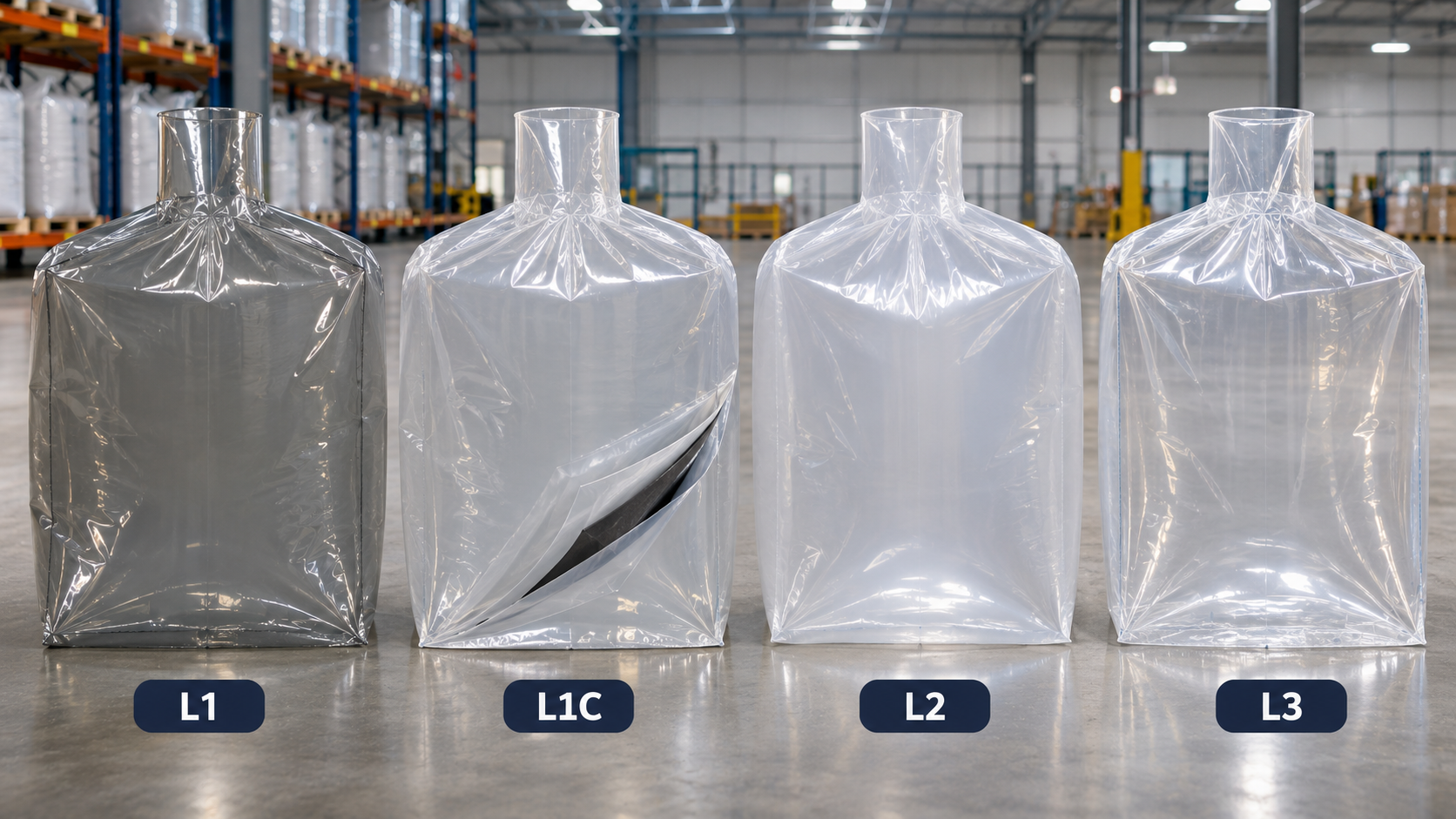
The standard covers electrostatic classification and testing of FIBCs and inner liners. Its 2018 edition distinguishes L1C multilayer liners with conductive internal layers.
For Type C; requires the specified earth connection.
Separate multilayer classification; for Type C with specified bonding.
Potential combinations with B, C, and D depend on their requirements.
For Type B only within the standard’s liner requirements.
Reference: IEC 61340-4-4:2018 — official standard overview ↗. Classification summaries omit detailed material limits and test conditions.
Overview for hazardous explosive atmospheres under IEC 61340-4-4:2018, Clause 4.3 and Table 6.
| Liner | Type B FIBC | Type C FIBC | Type D FIBC |
|---|---|---|---|
| L1 | Not permitted | Conditional: earth bonding | Not permitted |
| L1C | Not permitted | Conditional: earth bonding | Not permitted |
| L2 | Conditional | Conditional: earth bonding | Conditional: tested combination |
| L3 | Conditional | Not permitted | Not permitted |
Conditions matter. Type C combinations need specified earthing connections; incidental contact is insufficient. Type D/L2 needs ignition testing of the combination. Adding a liner does not change the outer bag’s type. Bag and liner breakdown-voltage requirements apply separately.
A reference for review, not an application approval. Review your actual bag, liner, process hazards, installation, and current documentation with a qualified electrostatics professional and the manufacturer before use. Bulk-Pack can help you work through the specification and testing questions.
Our 45+ years of FIBC manufacturing and sales experience help connect practical bag design questions with your technical requirements.
Share the product, dust ignition information, solvent or vapor exposure, filling temperature, and the site’s process hazard assessment.
Provide the bag classification, liner classification, manufacturer documentation, drawings, material structure, and thickness.
Request the applicable surface-resistivity, breakdown-voltage, bonding, and combination-test records for the actual proposed construction.
Show the attachment arrangement, designated connections, filling and discharge details, and equipment interfaces for review.
Include food-contact requirements, moisture or oxygen protection, closure details, and any proposed foil or other multilayer construction.
Identify any change in film, thickness, source, shape, attachment, or outer bag. Include approval requirements, quantities, and delivery needs.
Include the bag and liner drawings, test reports, application description, and the changes you want to make.
Share Your Specifications ↗Use the full standard and construction-specific records for the technical review.
Official scope, edition information, and access to IEC 61340-4-4:2018.
IEC 61340-4-4 ↗DEKRA describes electrostatic tests for FIBCs and liners, including resistivity and breakdown voltage.
DEKRA Electrostatic Testing ↗Find additional FIBC design, handling, and documentation resources.
Explore All Resources ↗Ask for the actual liner classification and supporting documentation. A general sales description does not identify which bag-and-liner arrangement has been evaluated.
Specify the required classification and request test records for the proposed construction. Do not use appearance as a substitute for documentation.
Send the proposed change for review before use. Include the material, thickness, supplier documentation, attachment details, and the outer FIBC specification.
Share the complete layer structure and application requirements. Ask for an evaluation of the proposed laminate within the intended bag design rather than assuming barrier performance establishes electrostatic suitability.
Share the information you have with Bulk-Pack. We can help identify which documentation and specialist testing questions need to be resolved before selecting a combination.
Yes. Send the bag and liner drawings, product and process information, operating conditions, current test reports, and any proposed changes. Include your site’s technical requirements.
Share your material, process hazard assessment, FIBC type, liner classification, construction drawings, test reports, earthing arrangements, operating environment, and quantity.